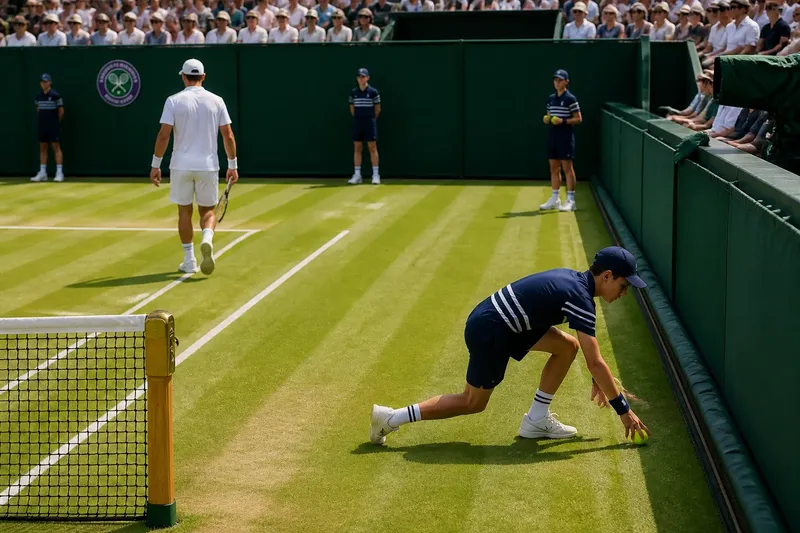
What a Tennis Let Means and What Gets Replayed
A tennis let can replay a serve or a whole point. Learn how to track the score, service fault status, and next action when play stops.
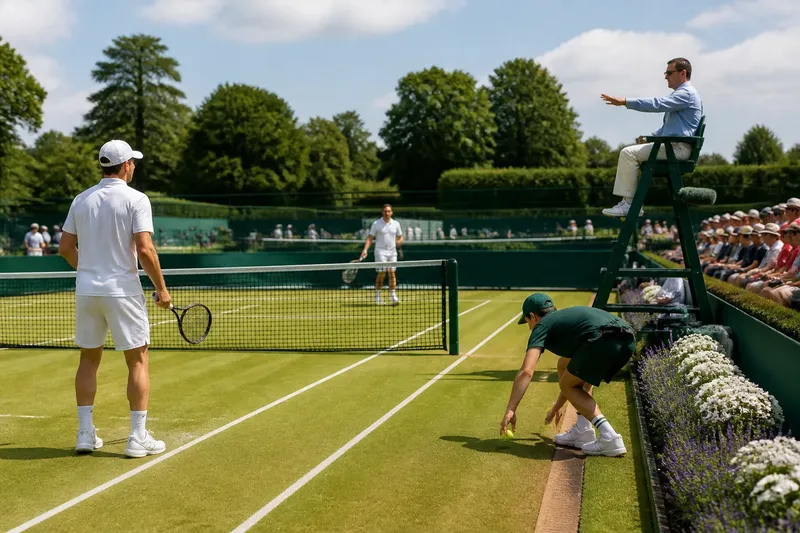
The server’s toss is in the air when a ball rolls behind the baseline from a neighboring court. The chair calls “Let,” and the players stop. To understand what happens next, ask whether the serve was still being played or a rally had already begun: a tennis let can replay a delivery or an entire point.
A tennis let resets either the serve or the point
A let stops play under a rule-defined circumstance, but the reset depends on when it occurs. A service let repeats the current serve. A let during a rally generally means the point is replayed, subject to the applicable rules and the official’s ruling.
On a service let, the server repeats the same attempt: a let on a first serve is replayed as a first serve, and a let on a second serve is replayed as a second serve. Any fault already counted before that serve remains part of the service sequence.
A rally let is different. The players replay the point from the start, and the score returns to what it was before that point began. If a fault occurred on the serve that started the point, whether the server receives a first serve after the replay depends on the rules governing the event and the circumstances of the call. Do not assume that every rally let erases a prior fault.
Listen for which action the official resets, and keep the existing score and fault status in view.
Net contact alone does not make a service let
In the standard service-let situation, the serve touches the net, strap, or band and then lands in the correct service court. The server repeats that same service attempt. If the ball touches the net but lands outside the correct box, it is a fault, not a let.
A ball that clips the net during an ordinary rally is different: if it lands in the court, play continues. The special service-let rule should not be applied to every net contact.
An interruption during a rally needs an official ruling
A loose ball, a shout, or another outside distraction does not automatically stop a point. A player may raise the issue, but the official applies the event’s rules and decides whether play should stop and what should be replayed.
Imagine a doubles point with the score at 30–15. During the rally, a loose ball rolls close to a player’s path, and the chair calls a let before either player can safely continue. The rally stops, the score remains 30–15, and the point is replayed. If the serve that began the point followed a fault, the server’s next service attempt is determined by the applicable rules and the chair’s ruling; the replay does not, by itself, prove that the server gets a first serve.
How can you tell what happens after a let?
Does a serve that clips the net always count as a let?
No. For a service let, the serve must touch the net, strap, or band and land in the correct service court. A serve that lands out is a fault.
Does a rally let always give the server a first serve?
No. The point is replayed, but the service status after an earlier fault depends on the applicable rules and the circumstances of the call. Follow the chair’s ruling rather than assuming the fault disappears.
Can a player stop play for a distraction?
A player can raise a possible interference, but stopping does not automatically create a let. The official decides whether the rules call for a stoppage and replay.
Is a let the same as a fault?
No. A fault counts in the service sequence; a let calls for a replay of the serve or, when the rules and ruling require it, the point. Keep the two calls separate when following the score.
Use the call and the score to track the reset
Check what was happening at the instant of the call, then note the score and service sequence. These observations help you follow the restart without guessing:
- Serve touched the net and landed in the correct box: If both conditions are present, then expect the same serve attempt to be replayed; otherwise, if the serve landed out, treat it as a fault under the rules.
- A fault had already been called: If the fault is part of the current service sequence, then keep it in view; otherwise, if no fault was called, track the upcoming serve as the first attempt unless the official rules otherwise.
- The players were exchanging shots: If the chair calls a rally let, then note the point score and prepare for a replay; otherwise, if no let is called, play may continue under the rules.
- A loose ball or distraction appeared: If the official rules the interruption affected play, then follow the announced replay; otherwise, if no let is granted, the original point result stands.
- The score was announced before the point: If the point is replayed, then return to that score; otherwise, if the official awards the point, update the score accordingly.
- The call’s type is unclear: If the chair explains a service let, then repeat the current serve status; otherwise, if the chair rules a rally let or another interruption, follow that ruling and clarify the service sequence before the next delivery.
Competition rules can differ, especially for interruptions and point replays. When the service status is unclear, rely on the chair official or the event’s published rules.
Keep the replay tied to the reason for the call
A let is not a general reset for an awkward shot or an unwanted outcome. It identifies a particular event that interrupts play, then calls for the replay specified by the rules: the current serve or the point.
When you hear “Let,” first locate the call in the action, then remember any fault already recorded. That is the clearest way to follow what gets replayed and why the score may not reset as far as you expect.