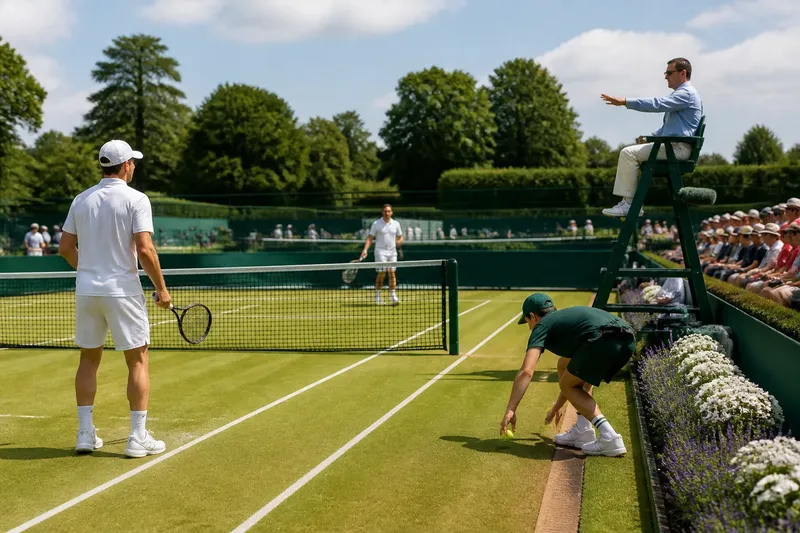
The Ball Kids Are Not Background: What Their Work Adds to a Match
Watch ball kids in tennis to see how court positions, ball handoffs, and towel routines support players and officials without interrupting the match.
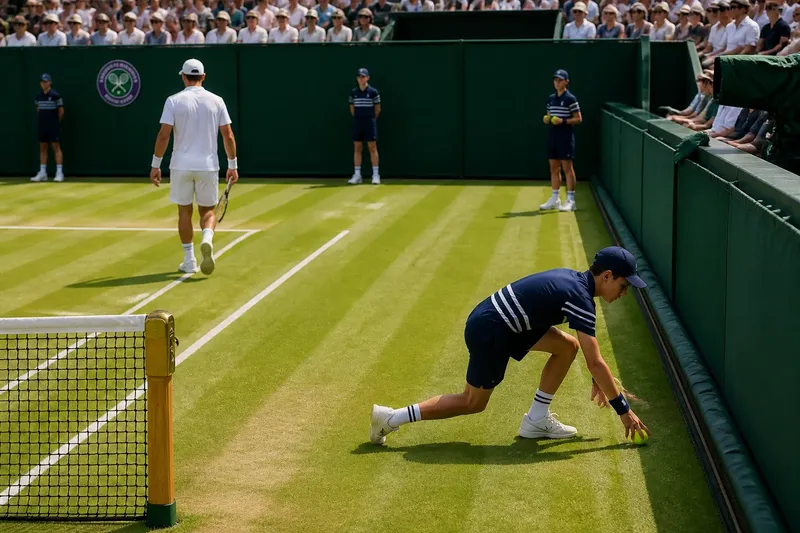
A rally ends with the ball skidding toward the back fence. As the players turn away, a ball kid moves to collect it while the others hold their positions. Watch ball kids in tennis and you can see how a match’s working environment is organized, not just how loose equipment gets picked up.
The clearest way to follow their role is to notice the court’s layout, the team’s assigned areas, and the difference between support work and official decisions. Each event may use its own routines, but the same basic question helps: what task is happening, and who is responsible for it?
Court positions divide the work
Before play begins, look for ball kids near the net, along the sidelines, and behind the baselines. Their locations give them different areas to cover. The arrangement varies by event and court, so avoid assuming that every ball kid has the same assignment.
During a rally, watch how they stay outside the players’ paths. When the point ends, the nearest person may handle a loose ball while a teammate remains ready elsewhere. This division makes the group’s movement easier to read than treating every pickup as a separate reaction.
Pick one position to observe for a game. You’ll see when its occupant waits, moves, or receives a ball from a teammate.
Ball handoffs reveal the team’s coordination
After a point, balls can be left near the net, at a baseline, or beside a player. Ball kids collect and move them according to the court’s routine. Some balls are sent toward a player preparing to serve; others are passed to a teammate or kept out of the playing area.
Follow one ball from where it stops to where it goes next. That route can show how the team shares work across the court, while the players remain free to prepare for the next point. A ball kid may pause before moving if a player is still passing through the area.
Imagine a ball has stopped near the baseline as the server walks back to prepare. The nearest ball kid waits until the player has cleared the path, picks up the ball, and sends it toward the appropriate side; a teammate keeps a spare available. The visible result is an unobstructed baseline and a server who can continue the routine without stepping around the stray ball.
Towels are a separate support routine
At many matches, ball kids also help players access towels. Notice where a towel is kept and how the player signals for it. The ball kid’s task is to make it available without crossing the player’s path, then return it when the player is done.
This routine may look different across events. Rather than tracking every towel trip, watch for the signal, the handoff, and the ball kid’s return to position. That gives you a useful view of how players manage a pause without mistaking it for a change in the rules.
Support work does not decide the match
Ball kids do not call the score, judge whether a shot is in, or decide when a point counts. Those responsibilities belong to the players and match officials under the event’s rules. Ball kids handle practical tasks around that structure.
If play pauses, look for the official or player responsible for the decision rather than assuming the nearest ball kid caused the delay. A ball kid may be waiting for a clear path, but the reason for a longer pause can be unrelated to their work.
What should you watch when following ball kids?
Where should I start?
Choose one ball kid near a baseline and watch their position during a point and after it ends. You’ll get a clearer sense of their assigned area than by trying to follow everyone at once.
Why do ball kids pass balls to one another?
A handoff can move a ball across the court without sending each person after every loose ball. Watch the route and the receiving position to understand how that event’s team divides the work.
Do ball kids decide when a player can serve?
No. They may provide a ball or towel, but they do not determine whether play can begin. Players and match officials have the relevant responsibilities.
Why might a ball kid wait before collecting a ball?
Waiting can keep a ball kid clear of a player or avoid crossing the player’s path. Look at where the player is moving before deciding that a ball has been overlooked.
Use these viewing cues to read the court
For a focused view, track one point from the end of the rally through the next serve. Check each cue and use what you observe to decide what to follow next:
- Position: If a ball kid stays near one area, follow that person’s coverage; if their assignment is unclear, watch the nearest player movement before guessing.
- Loose ball: If a ball lies in a player’s route, watch for a clear moment before retrieval; if the route is occupied, note the pause rather than assuming the ball was missed.
- Handoff: If a teammate receives the ball, follow its route to see which area is being served; if no handoff occurs, watch whether the ball is held or sent directly toward a player.
- Spare ball: If the server keeps an extra ball, watch where the unused one goes; if the player returns it, follow how the team clears it from the playing area.
- Towel signal: If a player requests a towel, watch where it is offered; if there is no request, keep attention on the ball routine rather than expecting a towel trip.
- Official decision: If play stops after an official’s signal, follow the official’s action; if a ball kid is simply waiting, treat that as a support task rather than a ruling.
Say you are watching a televised match and the camera stays on the server between points. You notice a loose ball near the baseline, a player walking back, and a spare in a teammate’s hands. First, follow the player’s path; then watch the nearest ball kid wait, collect the loose ball once the path clears, and pass it away from the playing area. The result is a readable sequence: the player keeps their route, the stray ball leaves the court, and the teammate retains the spare for the next routine.
Read one transition without losing the tennis
When the camera changes angle, use the players’ positions and the ball kids’ court stations to reorient yourself. Track one handoff or one towel request, then return your attention to the serve and rally. This keeps the support work in view without turning every pause into a separate story.
Watch ball kids in tennis as part of the match’s shared working space: their positions and handoffs explain how practical tasks are assigned, while the players and officials remain responsible for the action and its decisions. The next time a ball rolls away, follow where it goes—and then bring your eyes back to the server.